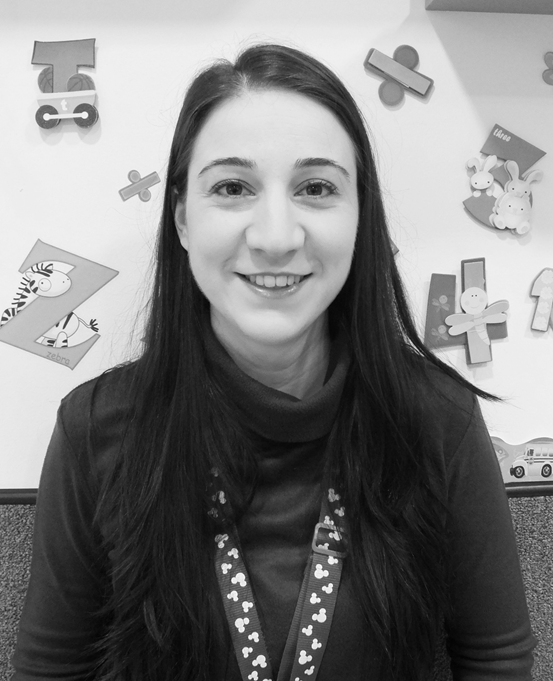
Dumpling and I were both blessed to have gotten to know Joanne from The Speech Pathology who helped Dumpling with a sound production a few months ago. In my post earlier, I shared about our experience on what goes on in the therapy room.
After sharing that we attended Speech Therapy, PMs on Facebook came in fast and furious. I decided to post the common questions that I received to Joanne which I hope are useful to you.
(Pic above: Dumpling hamming it up with Joanne)
Me: Hi Joanne, thank you for agreeing to the interview. First off, please tell us a bit more about yourself. :)
Hi everyone! I'm a qualified Speech-Language Pathologist/Therapist who is originally from Perth, Australia. I've been living and practising Speech-Language Therapy in Singapore for close to a decade now. I'm currently working in a centre called The Speech Pathology Centre. My specialty is Paediatric Speech, Language and Communication Disorders. This means that I work with children of all ages to improve their abilities to communicate and build relationships with others. I love working with kids as they keep me smiling all day long :)
Me: Speech therapy is not something that is widely discussed here in Singapore and certainly, speech therapist is not a common vocation. Can you share a bit more on what exactly being a Speech Therapist entails?
Working as a Speech-Language Therapist (SLT) means everyday is new and exciting. For many years now I have been working in a daily intervention programme for children called the Excelerate V2 Programme. It's a one-of-a-kind programme here in Singapore that provides integrated, daily therapy input for children between the ages of 18 months - 12 years, with developmental delays. I see children for speech therapy in small groups and assist them in reaching their communication potential through games and engaging classroom experiences.
Many of the children I work with enter the programme non-verbal, which means they are not yet using speech and verbal language to communicate with others. Overtime, most of the children enrolled achieve functional and meaningful verbal communication. They learn to talk and interact with others. It's the most rewarding job in the world!
I also see children for individual speech therapy sessions. Children who see me for 1:1 therapy typically have mild to moderate difficulties in the areas of articulation (i.e., speech sound production), fluency (i.e., stuttering), higher level language use (e.g., understanding and answering questions, following instructions or generating longer utterances) and literacy development (i.e., learning to read and write at an age appropriate level).
My job scope also includes seeing children with feeding difficulties. These issues can range from tactile defensiveness (i.e., having a sensitive mouth and hands), motor planning (coordination) issues for chewing, food refusal and dysphagia (swallowing difficulties).
Each day is new, exciting and full of challenges. With every new day comes a new opportunity to make a difference in a child's life. It's wonderful :)
Me: Will you be able to share, what are the typical milestones of speech development from 1.5/2 right up to 6 years old?
When we talk about speech and language we must recognise that they are two different but interconnected things. Language is the method of human communication. We typically use verbal language (spoken words), non-verbal language (gestures) and written language to communicate. Speech is the act of articulating our thoughts verbally. When we discuss developmental milestones, there are separate markers for both speech and language development.
:: Language Milestones:
Expressive Language (the "output" of language):
Most children by age 2 will have an expressive vocabulary upwards of 100 words, however there is great variation at this stage of development. What is clear however, is that children with less than 50 words or who are not yet combining words to form short phrases such as: "Mummy go!" "Drink juice" "Push Car" "Big Doggie" "Daddy eat" are at risk for language delay and would benefit from early intervention from a SLT. As a general marker, we are looking for at least 15-20 words by 18 months. It is important to note that these words should be spontaneous and meaningful, not simply imitated by your child.
By 3 years of age children should be chatting like little adults. There sentence structure and grammar does not need to be perfect but they should certainly have an expressive vocabulary consisting of hundreds of words and often exceeding a thousand. They should also be attempting longer sentences around 5 words in length.
Three year olds are typically able to make statements, give instructions, comment, ask questions and use negatives. You should be able to have a simple conversation on a variety of familiar topics with your little one by age 3.
Receptive Language (the understanding of language "input"):
Most children by age 2 can understand most of what is being said to them. They can follow routine instructions and also understand new directions. They can point to familiar items on request and can understand more complex language involving pronouns, verbs and adjectives. Two year olds love listening to stories and can repeat familiar phrases and words to 'read' along with you.
By 3 years of age your little one should understand all common verbs and nouns, most common adjectives and also some prepositions. They should be seeking new vocabulary by asking lots of "What's that?" type questions. They should have no problem at all following multiple step commands such as "Give me your spoon and give daddy your cup".
Speech Production [Articulation] Milestones:
Children are expected to achieve 80% intelligibility (be understood by unfamiliar listeners) by age 3 years. Before this age, we expect that children are still developing their speech musculature and are learning how to control their muscles for accurate speech sound production.
By age 3, we expect the following sounds to be clear and accurate:
m, n, h, p, ng, w, d, t, y, b, g, k
By age 4, most children are able to also articulate the following:
f, l, sh, ch
By age 4.5 years, the following sounds should be crisp and clear too:
s, z, j
By age 6, most sounds should be well developed, including the following:
v, consonant cluster such as sp-, cl-, bl-, pl-
Me: Based on the milestones shared, in your opinion, when should parents consider speech therapy?
As a basic rule, keep your eye out for the following “red flags”:
1) If your child is not displaying early language precursors by 12 months it means they are at risk of developing a speech and language delay. Early language precursors include:
looking interested in others (eye contact and joint attentional focus)
waiting and taking turns with others (turn-taking)
copying the actions of others (imitation)
2) By age 2 years, if a child has 50 words or less in their expressive vocabulary they are considered speech and/or language delayed. Intervention is indicated in these cases.
3) With regards to articulation development, it is important to seek the assessment of a SLT if unfamiliar listeners find your child difficult to understand at age 3 years.
Me: What typically is involved in the first consultation? Is this the 'assessment'? And if so, what does it entail?
Each initial consultation is a little different based on the age of the child, the difficulties they are presenting with and the child's personality. Typically, an initial consultation with run for 1 hour. In this time I will have a chat to the child's parents to get an understanding of their concerns. I will then take a detailed case history to better understand each child's background including their developmental milestones and medical history. From there I will either conduct a formal or informal assessment. This can either be play-based and observational in nature if the child is very young, or it can be a little more structured and formal if the child is school-aged. It is important that I have a representative sample of the child's communicative abilities, so often with the younger children I will need to go through a questionnaire with the parents to get an idea of how they communicate at home with family members and familiar people too. The consultation process is stress-free and fun for the children, so parents have nothing to worry about :)
Me: What should a parent then expect for follow up sessions and how long will the journey be?
By the end of a consultation I will advise parents on the best course of action moving forward for their child. Depending on the child's age, their diagnosis, the severity of the issues and also their personality, an individualised recommendation will be made. A traditional therapy model would involve seeing a child for 1:1 therapy each week for 1 hour, however this model is not always effective as changing the way a child communicates requires far more input than 1 hour per week. This is why a daily programme like The Excelerate V2 Programme is highly effective in facilitating change in children with moderate to severe communicative delays and disorders.
Me: Lastly what are some myths you would like to debunk, when it comes to speech therapy?
After watching the movie “The King's Speech”, there are certainly a lot of myths surrounding the modern practise of speech therapy. We most certainly do not fill children's mouths with marbles for a start :P
Myth #1: You should wait until your child is at least 3 years old before seeing a speech therapist. Most kids grow out of it. They'll talk when they're ready.
TRUTH: If we measure intelligence at 17 years of age, we find that 50% of that development occurred between conception and age 4. Paediatric Speech-Language Therapists are qualified to work with children from infancy to develop the precursors necessary for communication. Normal language development begins in the womb. Human brains are "pre-wired" for language. There are many language precursors and pre-linguistic behaviours that occur before a child utters their first word. By observing and interacting with an infant and young child, a SLT can determine if language development is at risk of being delayed. Stimulating and facilitating delayed areas of development can bring those skills closer to normal in the long run. SLTs can also help determine whether hearing problems are involved and can work with infants and children with swallowing and feeding issues, as well.
Myth #2: Individual (1:1) therapy is always better than group therapy.
TRUTH: This is certainly not the case. Communication occurs with a wide variety of partners, not just with your SLT in their clinic room. It's important that children learn to converse and generalise their language skills across all their environments, especially school, which relies heavily on peer to peer interactions. There are children who have certain disorders where 1:1 therapy is best, at least in the beginning (i.e. verbal dyspraxia/childhood apraxia of speech, articulation delay). Individual vs. group therapy really depends on your child’s needs.
Myth #3:'Speech pills', special gadgets, vitamins, diets etc can replace the need for speech therapy.
TRUTH: Be careful of any product that claims to improve speech and language skills or claims to completely replace the need for a qualified SLT. If it sounds too good to be true, it probably is. Nothing can replace steady and consistent work towards a goal.
Myth#4: No-one can understand my child who is 3 years old, but people say he will grow out of it.
TRUTH: By 3 years of age a child's speech is normally 80% intelligible to new people. There is a developmental hierarchy of sound development. Certain sounds are mastered before others and within certain time frames. A 3 year old child who is unintelligible may show an improvement in speech over time, but if sounds are not developed along normal milestones, it is more difficult to correct them later. Certainly if a 3 year old is unintelligible to others, it is time to seek an evaluation before the child becomes frustrated or develops self-esteem and confidence issues.
Thank you Joanne for such an insightful sharing!
Now, for those of you who wish to know more about what goes on in such a speech therapy session, here's my post on the sharing of our personal experience. If you have other concerns / wish to find out more, here's Joanne's details.
Senior Speech-Language Pathologist/Therapist
Manager of the Excelerate V2 Programme
B.Sc (HCS) Hons 1 [Aus], MSPA
Note: Dumpling and I attended the speech therapy sessions as a regular paying customer and I am not compensated for this post.